Ptosis vs Lazy Eye: Droopy Eyelid or Vision Problem?
What's the difference between ptosis vs lazy eye? Discover the interesting and curious truth behind these two conditions.
Quick answer
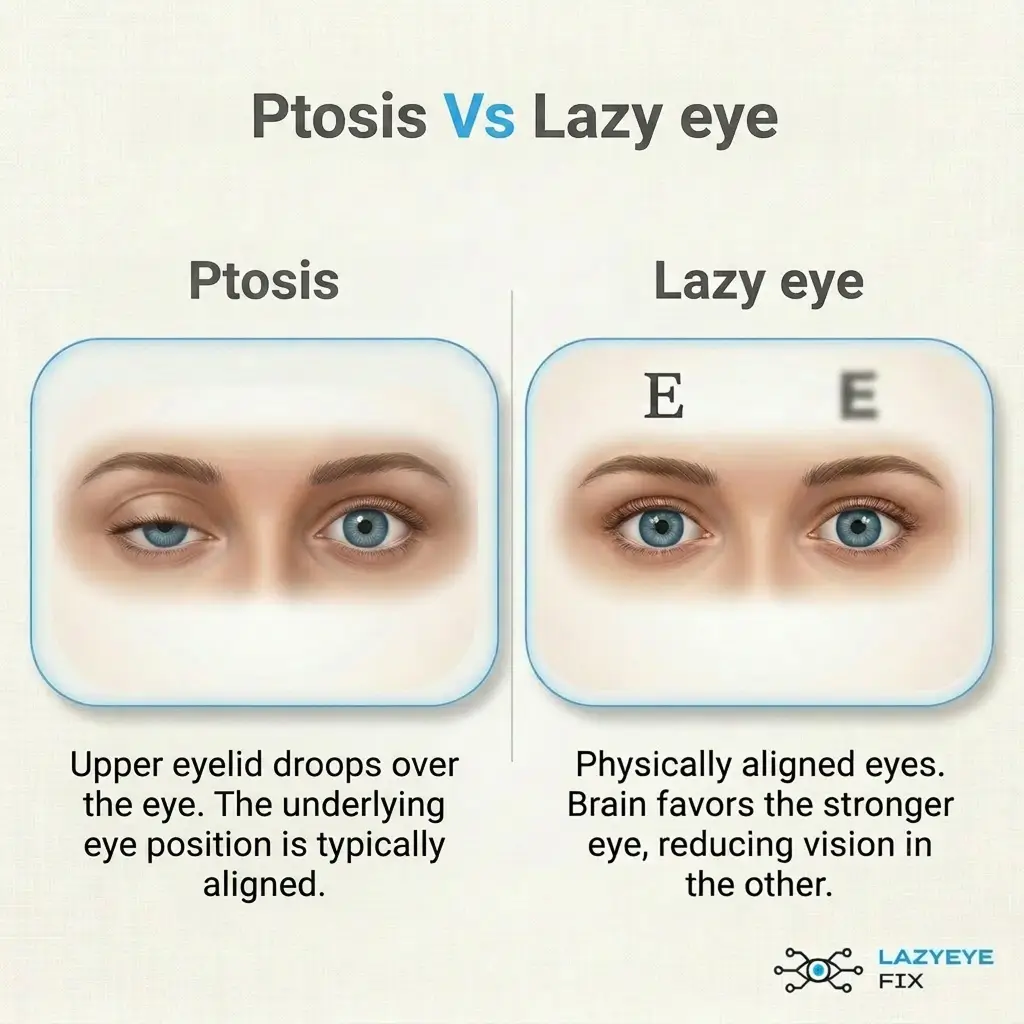
Ptosis is a droopy upper eyelid.
Lazy eye is a common everyday term. Doctors usually use it to mean a vision problem where one eye does not see as well.
At a glance
A quick comparison table for the signs people usually notice first.
| Question | Ptosis | Lazy eye |
|---|---|---|
| Main issue | Upper eyelid droops | One eye does not see as well |
| Underlying issue? | Eyelid position | Brain visual processing |
| Visible in photos? | Often yes | Usually no |
| Can eyes look straight? | Yes | Yes |
| Best question to ask | Does the lid cover the pupil? | Does each eye see clearly? |
How it works
Ptosis
Ptosis is the physical position of the upper eyelid. If the lid covers the pupil, it can block the eye from receiving a clear image.
Open pupil
Lid blocking view
Lazy eye
Lazy eye usually describes the brain's reduced use of one eye. If the brain receives a blocked or blurry signal for long enough, it may stop developing strong vision from that eye.
Brain
Brain
See how lid coverage influences amblyopia
Move the slider to see how a drooping lid can block visual input before it reaches the brain.
Visual input
Amblyopia / lazy eye risk
Simplified visual model. It shows why the brain may rely less on one eye when the image is harder to combine or partly blocked.
Spot the difference
Choose the description that sounds closest to what you are noticing. This can help you use clearer words during an eye exam, but it is not a diagnosis.
Related lazy eye types
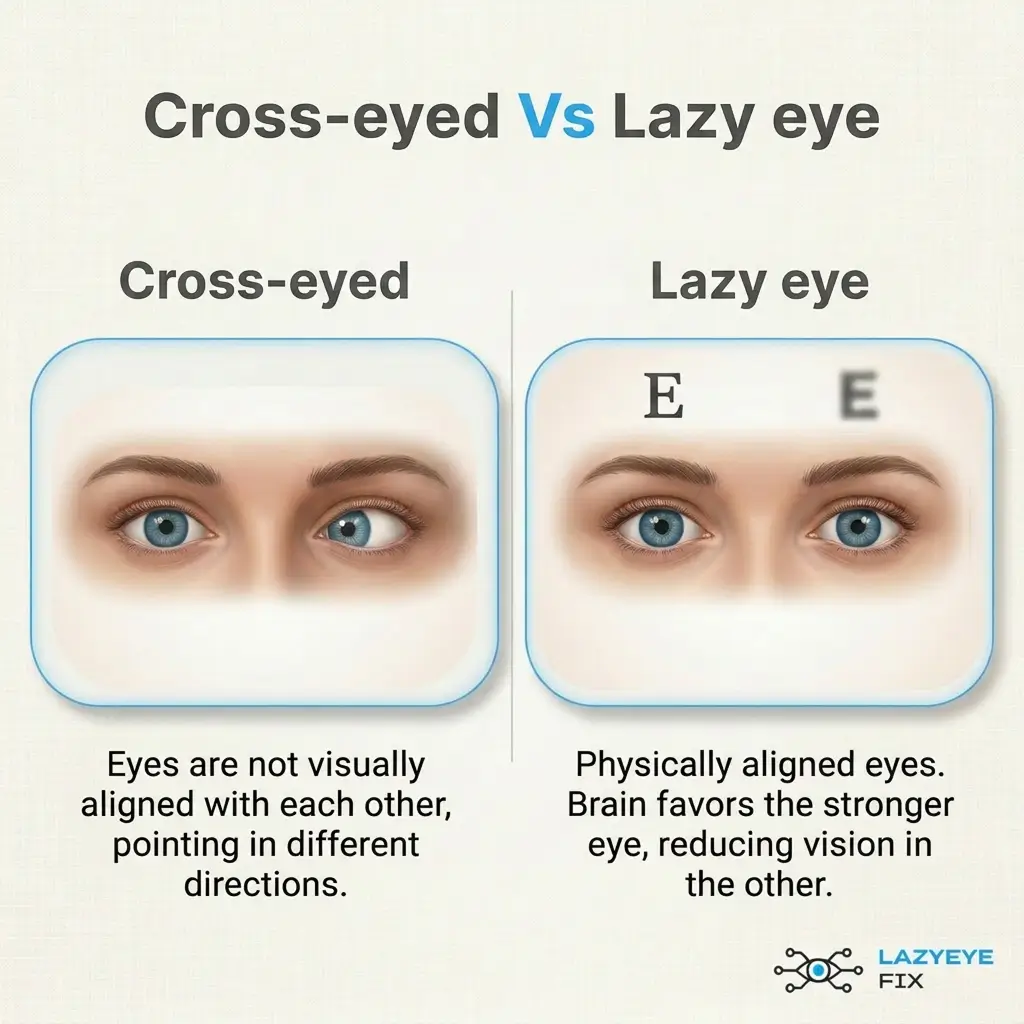
Cross eyed is when one eye turns inward.
Lazy eye is a common everyday term. Doctors usually use it to mean a vision problem where one eye does not see as well.
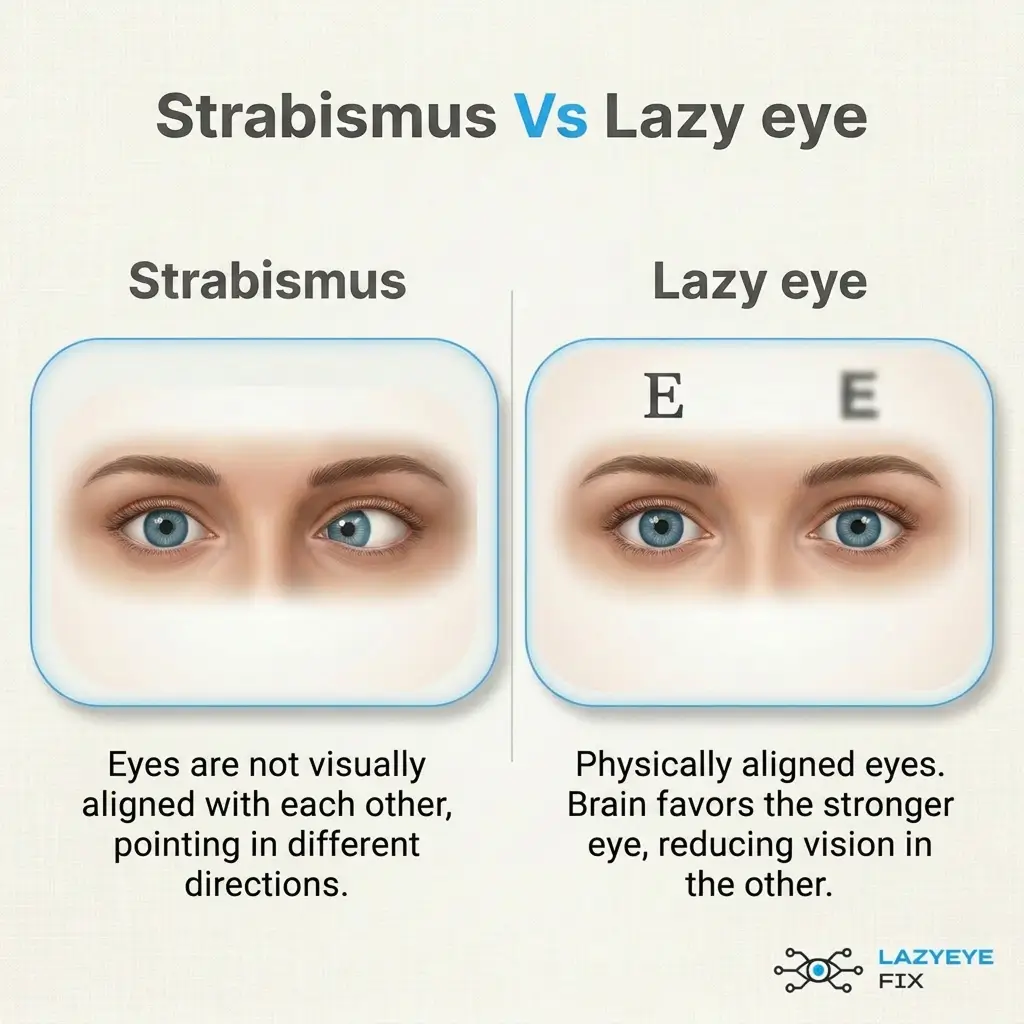
Strabismus is when the eyes are not aligned.
Lazy eye is a common everyday term. Doctors usually use it to mean a vision problem where one eye does not see as well.
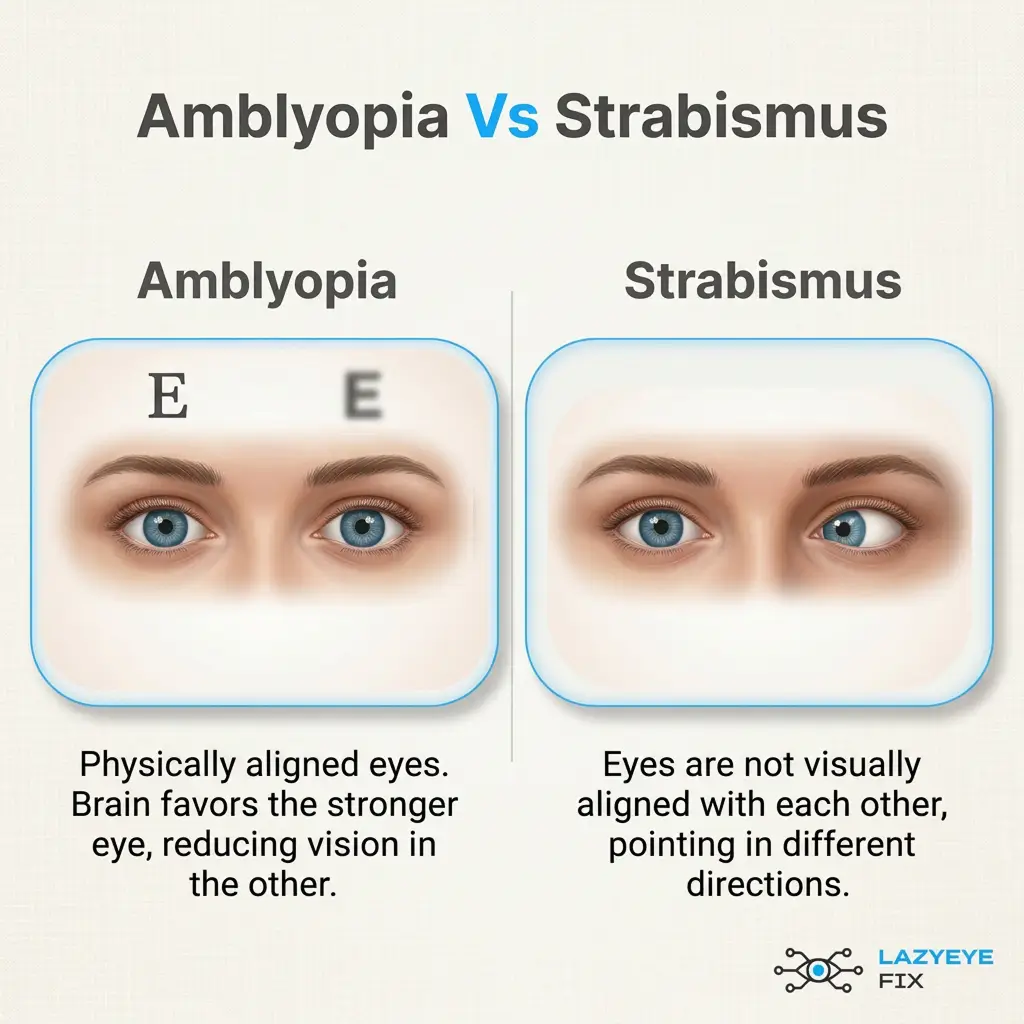
Amblyopia is a vision problem where one eye does not see as well.
Strabismus is an eye alignment problem where the eyes do not point the same way.
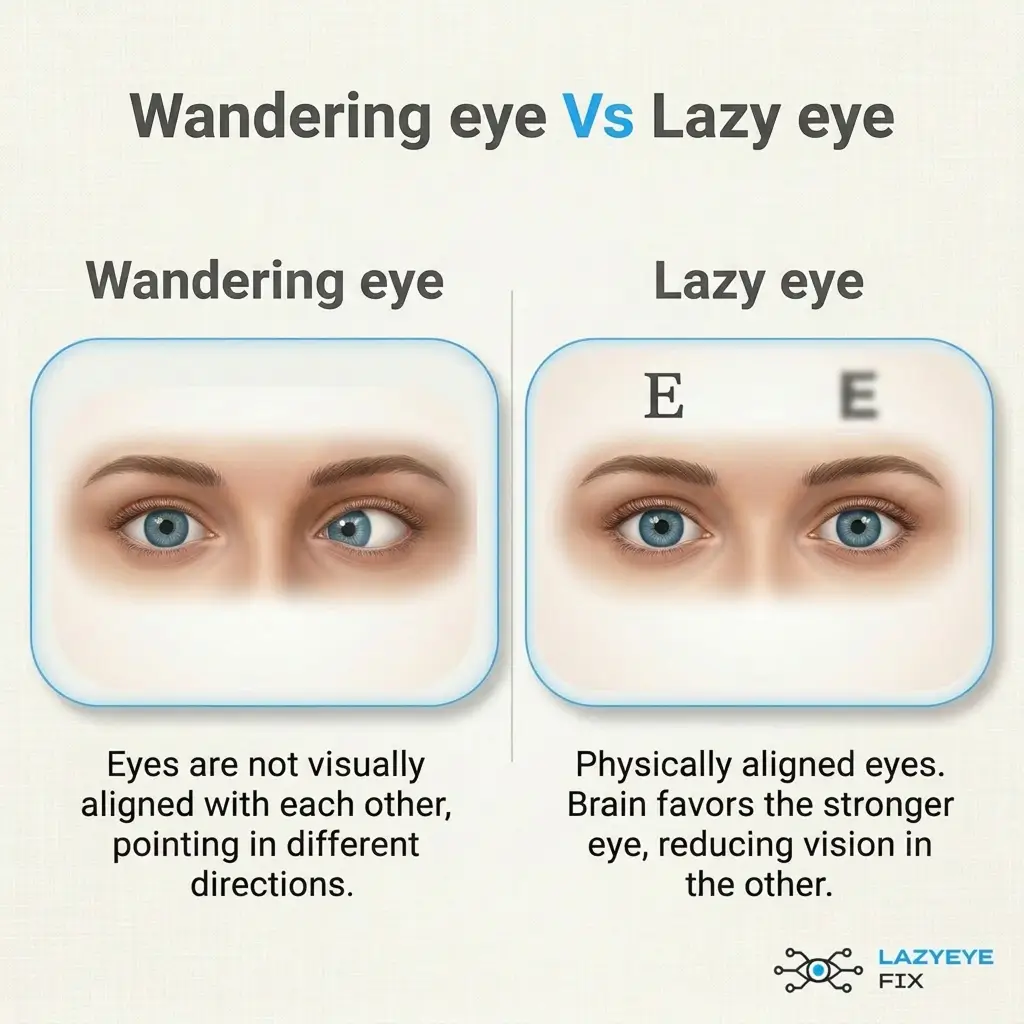
Wandering eye is when one eye drifts or moves out of line.
Lazy eye is a common everyday term. Doctors usually use it to mean a vision problem where one eye does not see as well.
FAQ
Frequently Asked Questions
If the drooping eyelid physically crosses over the center of the pupil in a baby or young child, it acts like a permanent eye patch.
This deprives the eye of input, known as 'deprivation amblyopia,' requiring urgent medical evaluation.
No. Lifting the eyelid clears the mechanical obstruction, but the brain's visual pathways still need to catch up.
Post-surgery, the child usually still requires patching or vision therapy to correct the amblyopia that formed while the eyelid was down.
No. Tools designed for visual alignment practice (like tracking software) cannot treat ptosis.
Ptosis is caused by the levator muscle inside the eyelid stretching or failing, which generally requires surgical tightening, not visual practice.
- At what point does a droopy eyelid (ptosis) threaten to cause a permanent lazy eye?
- If the drooping eyelid physically crosses over the center of the pupil in a baby or young child, it acts like a permanent eye patch. This deprives the eye of input, known as 'deprivation amblyopia,' requiring urgent medical evaluation.
- If ptosis surgery is performed to lift the eyelid, does the lazy eye instantly go away?
- No. Lifting the eyelid clears the mechanical obstruction, but the brain's visual pathways still need to catch up. Post-surgery, the child usually still requires patching or vision therapy to correct the amblyopia that formed while the eyelid was down.
- Can eye alignment tools or vision exercises lift a droopy eyelid?
- No. Tools designed for visual alignment practice (like tracking software) cannot treat ptosis. Ptosis is caused by the levator muscle inside the eyelid stretching or failing, which generally requires surgical tightening, not visual practice.