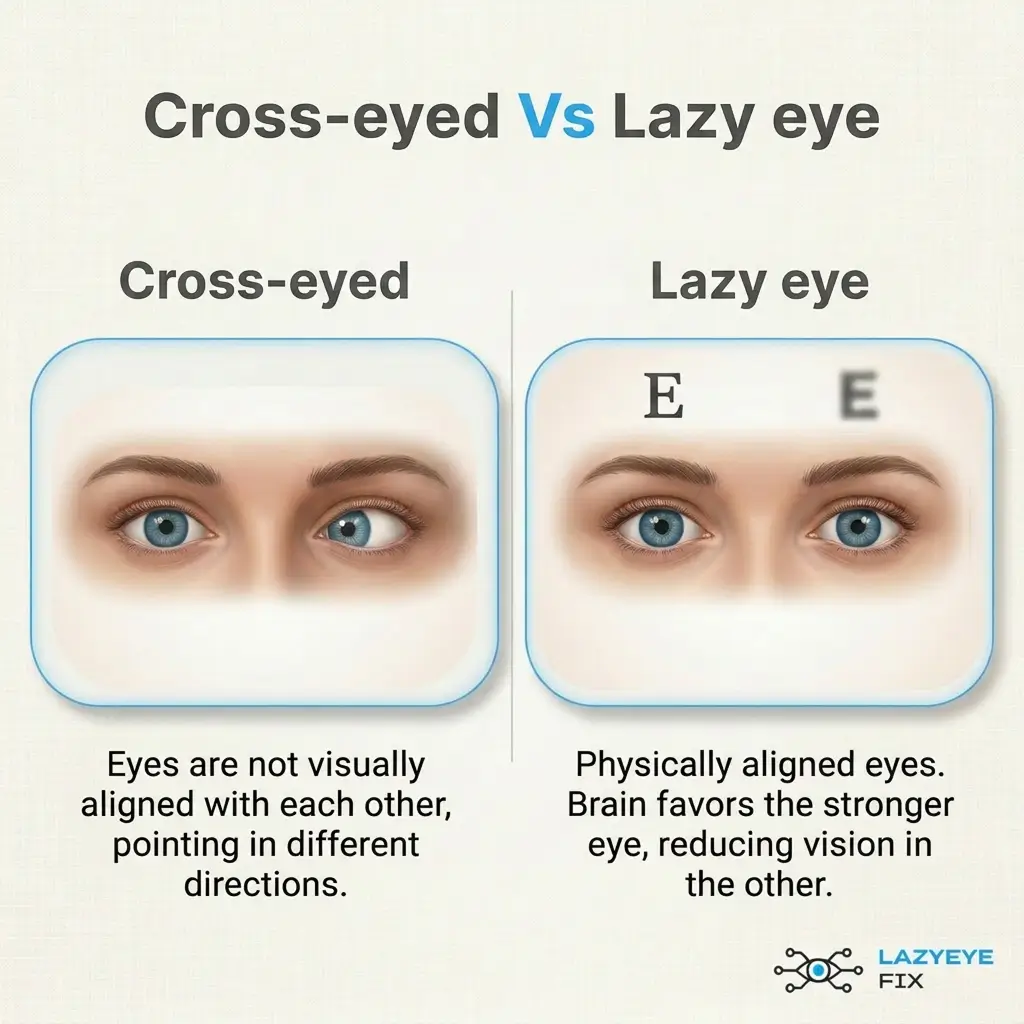
Cross-eyed vs lazy eye
Cross eyed is when one eye turns inward.
Lazy eye is a common everyday term. Doctors usually use it to mean a vision problem where one eye does not see as well.
Types of lazy eye
Discover the different types of lazy eye, strabismus, amblyopia, wandering eye, crossed eyes, and ptosis.
Cross eyed is when one eye turns inward.
Lazy eye is a common everyday term. Doctors usually use it to mean a vision problem where one eye does not see as well.
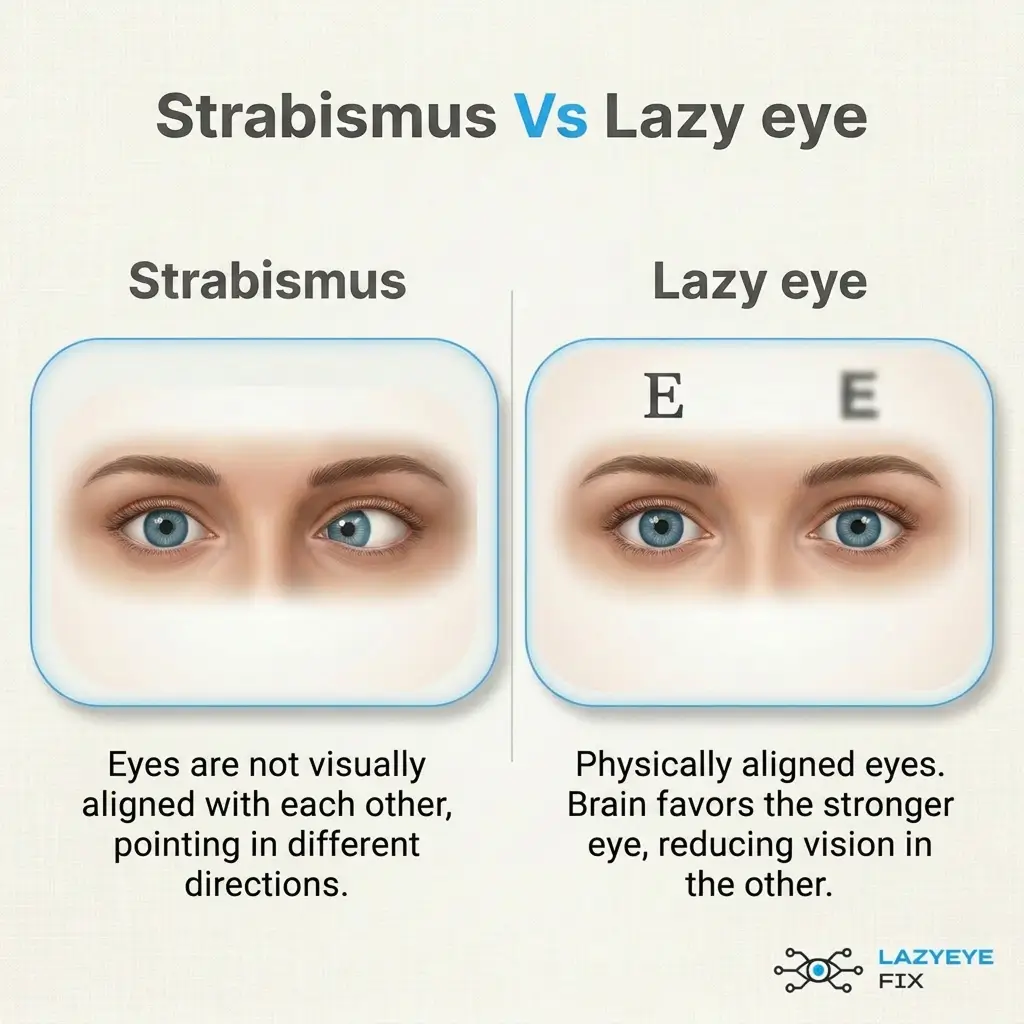
Strabismus is when the eyes are not aligned.
Lazy eye is a common everyday term. Doctors usually use it to mean a vision problem where one eye does not see as well.
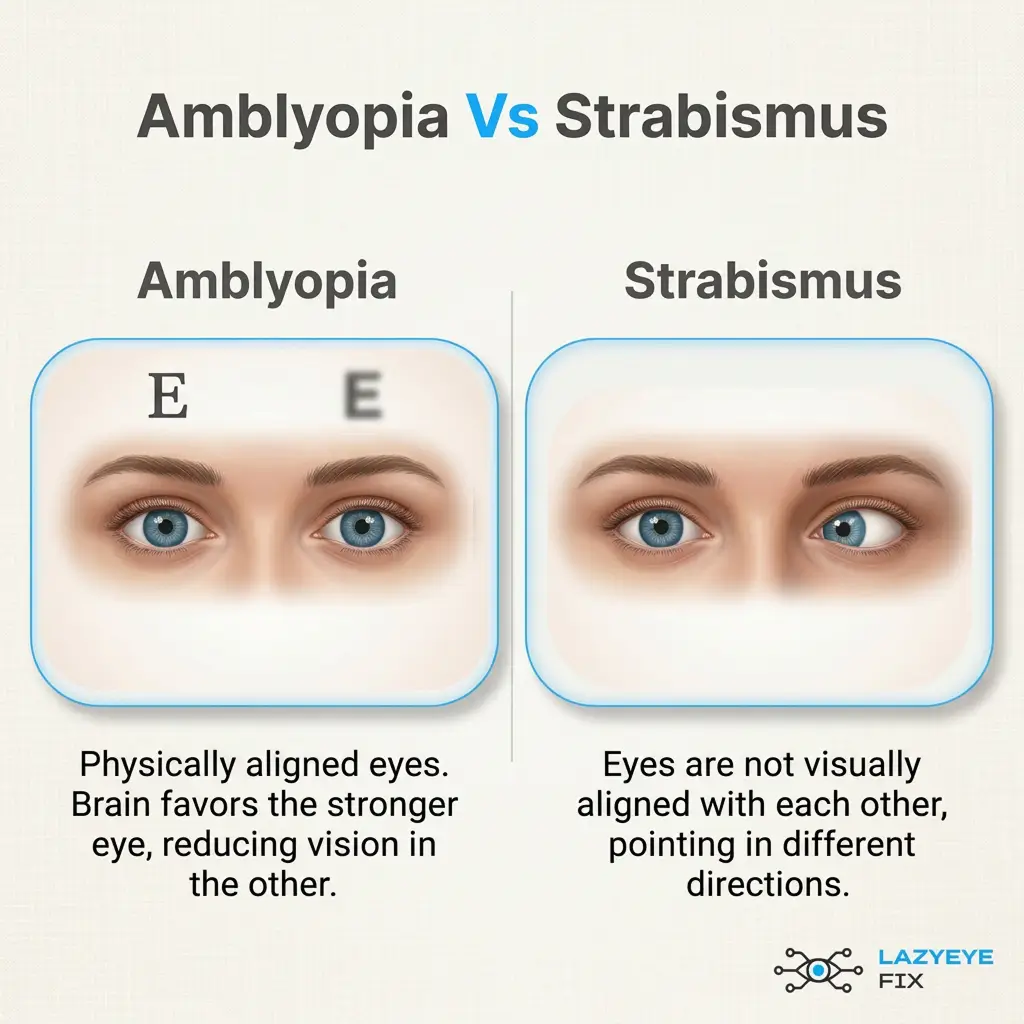
Amblyopia is a vision problem where one eye does not see as well.
Strabismus is an eye alignment problem where the eyes do not point the same way.
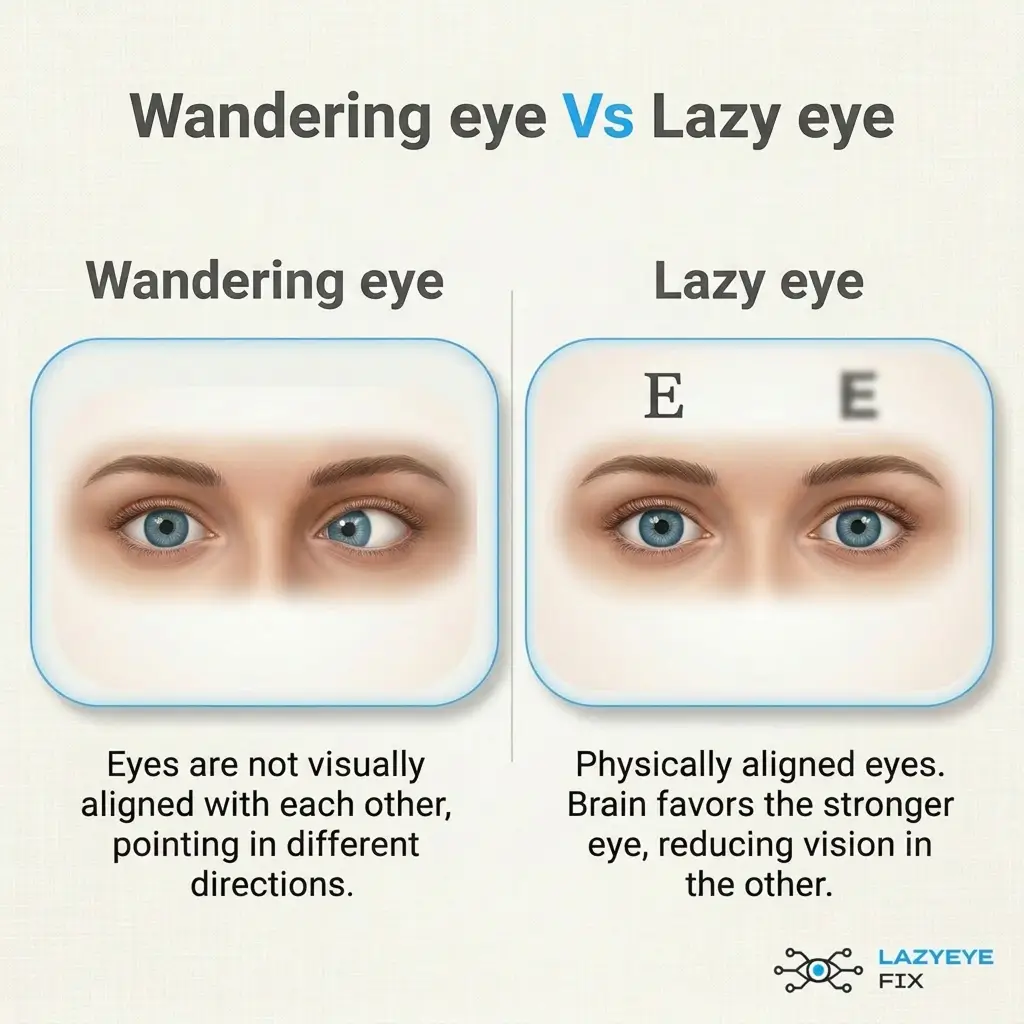
Wandering eye is when one eye drifts or moves out of line.
Lazy eye is a common everyday term. Doctors usually use it to mean a vision problem where one eye does not see as well.
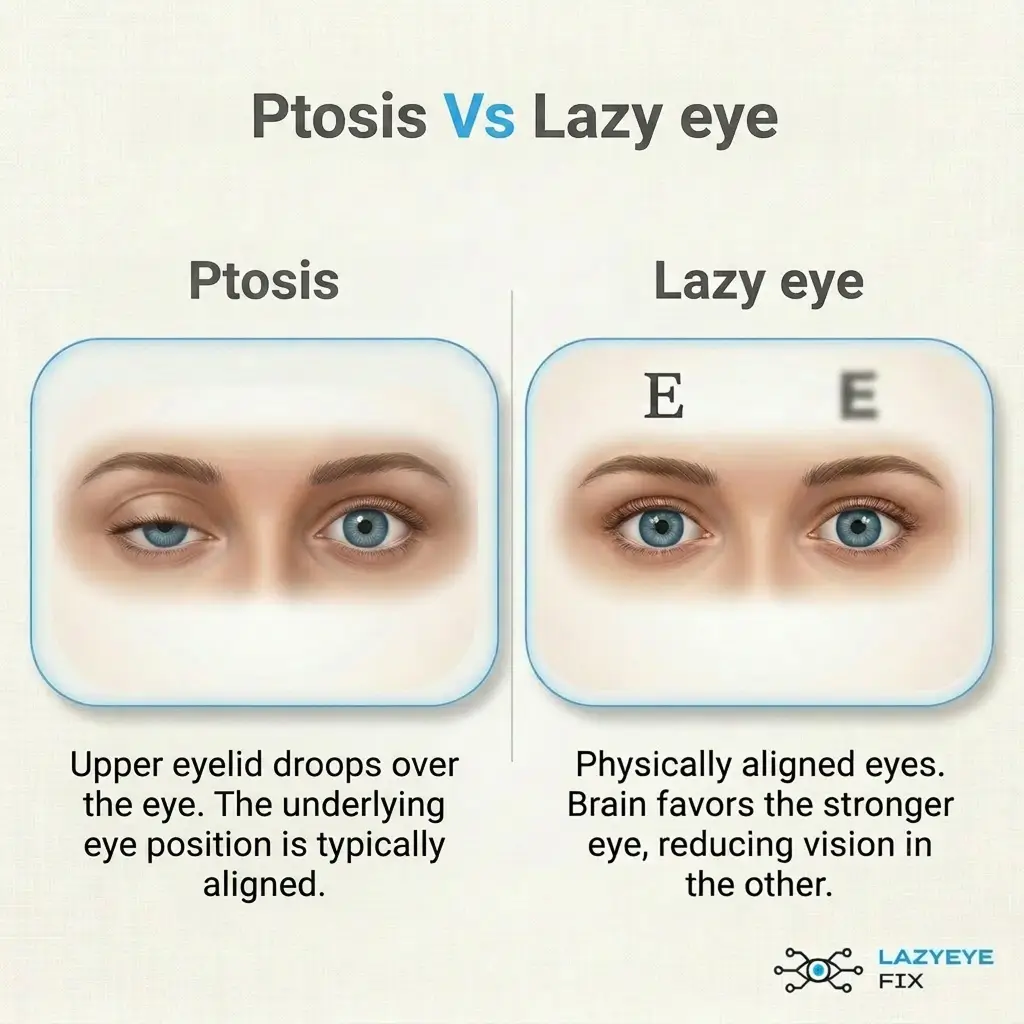
Ptosis is a droopy upper eyelid.
Lazy eye is a common everyday term. Doctors usually use it to mean a vision problem where one eye does not see as well.





Upload your picture and let our AI gently realign eye positions for a natural, confident look.
No Photoshop skills. No retakes. Just crisp, share-ready photos in seconds.