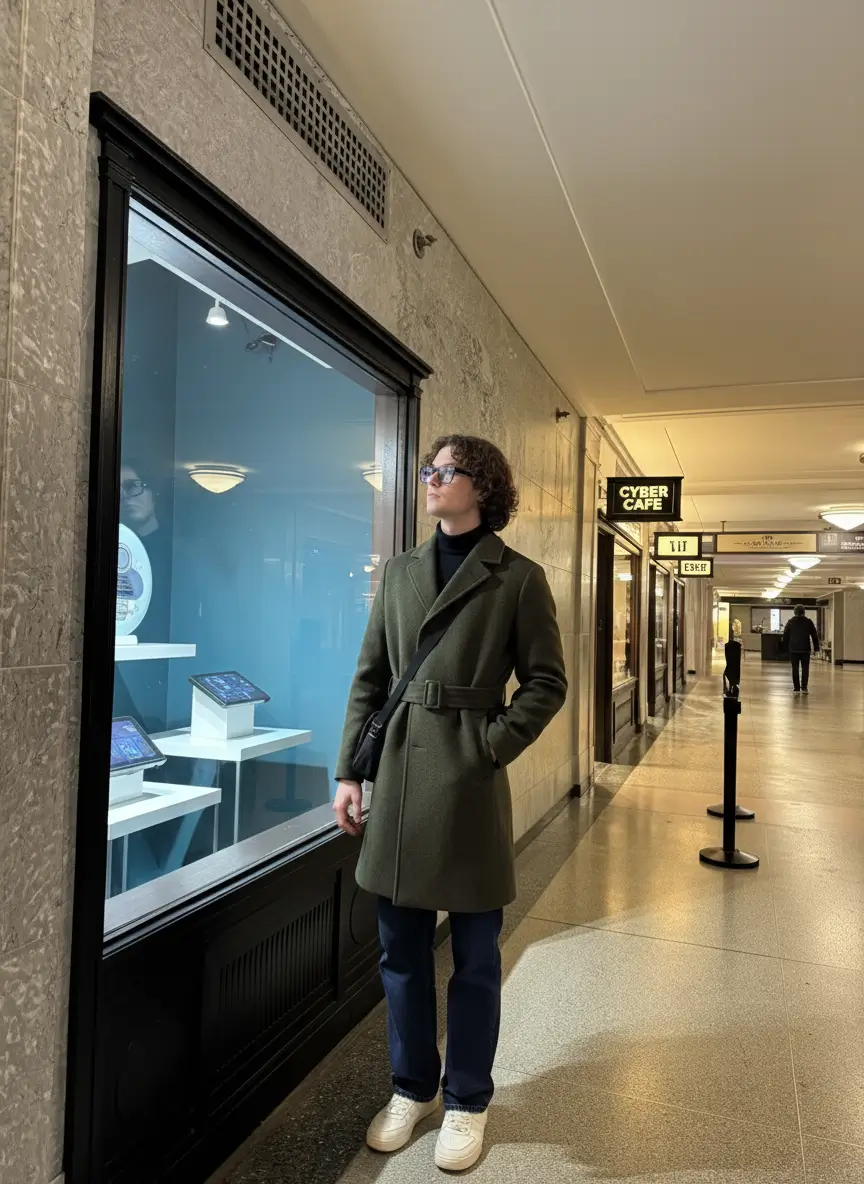
Wandering Eye vs Lazy Eye: Eye Drift or Weak Vision?
What's the difference between a wandering eye vs lazy eye? Here's the simple but curious truth.
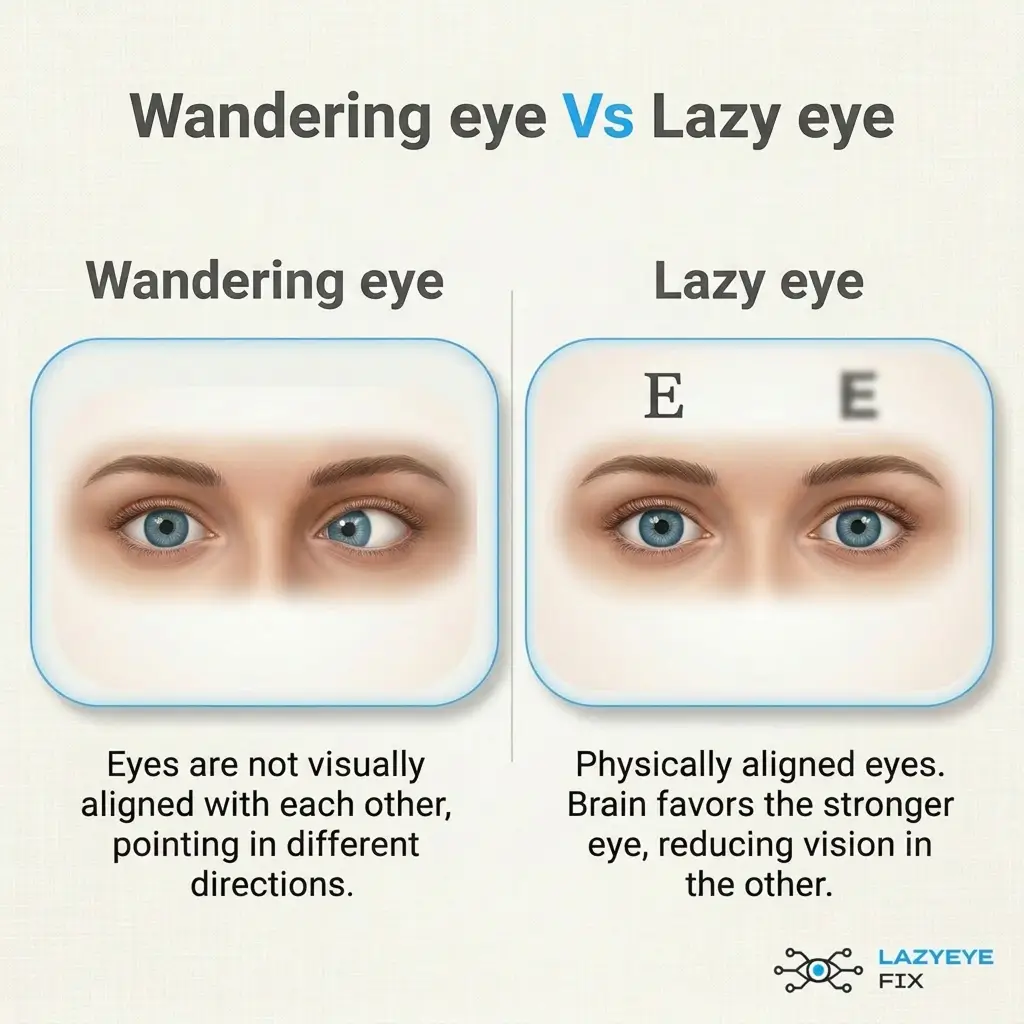
Quick answer
Wandering eye is when one eye drifts or moves out of line.
Lazy eye is a common everyday term. Doctors usually use it to mean a vision problem where one eye does not see as well.
At a glance
A quick comparison table for the signs people usually notice first.
| Question | Wandering eye | Lazy eye |
|---|---|---|
| Main issue | One eye drifts out of line | One eye does not see as well |
| Underlying issue? | Eye muscle/alignment control | Brain visual processing |
| Visible in photos? | Often yes | Usually no |
| Can eyes look straight? | Sometimes | Yes |
| Best question to ask | When does the eye drift? | Does each eye see clearly? |
How it works
Wandering eye
A wandering eye describes the eye's physical position changing over time. The eye may drift out of line, especially when tired or unfocused.
Balanced eye muscles
Unbalanced eye muscles
Lazy eye
Lazy eye usually points to the brain's reduced use of one eye. The brain may suppress a confusing image instead of combining both images clearly.
Brain
Brain
See how eye alignment influences amblyopia
Move the slider to see how an eye drifting out of line can make the brain's signal harder to use.
Simplified visual model. It shows why the brain may rely less on one eye when the image is harder to combine or partly blocked.
Spot the difference
Choose the description that sounds closest to what you are noticing. This can help you use clearer words during an eye exam, but it is not a diagnosis.
Related lazy eye types
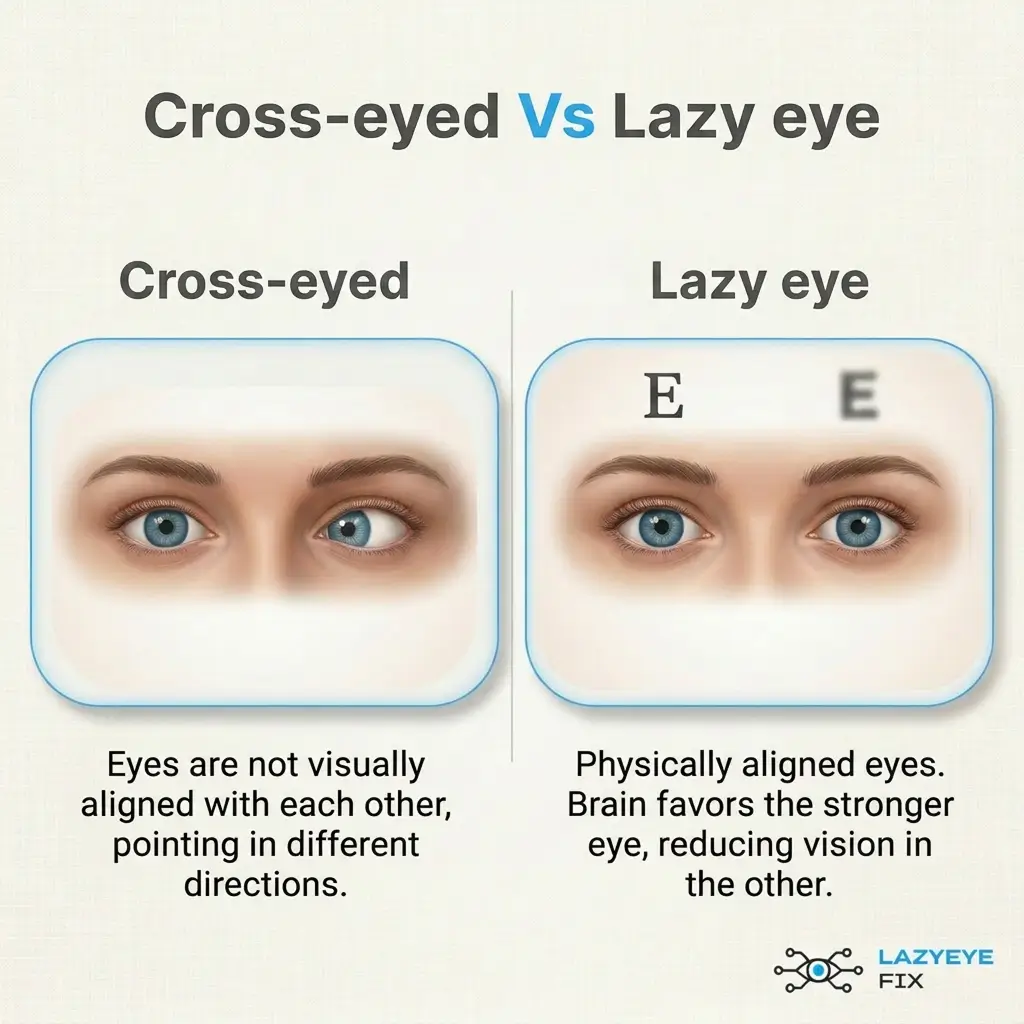
Cross eyed is when one eye turns inward.
Lazy eye is a common everyday term. Doctors usually use it to mean a vision problem where one eye does not see as well.
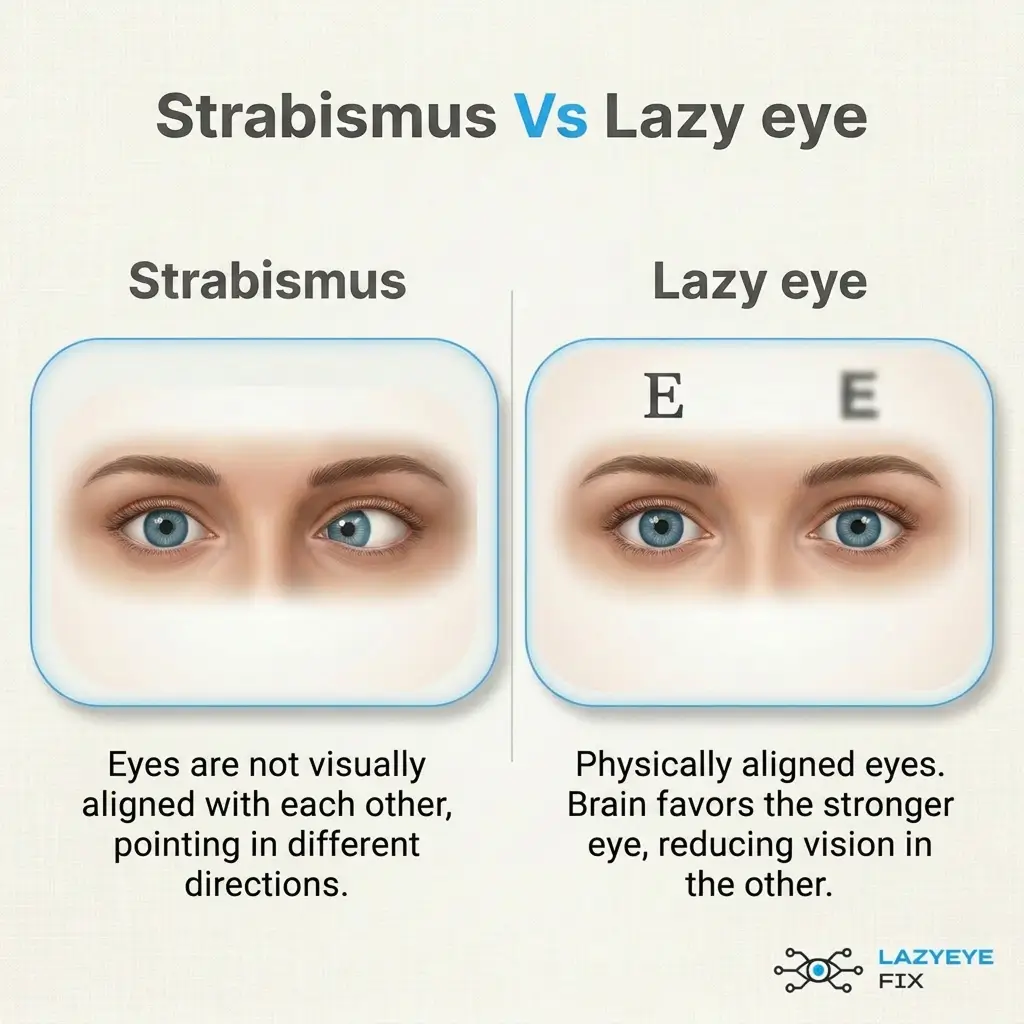
Strabismus is when the eyes are not aligned.
Lazy eye is a common everyday term. Doctors usually use it to mean a vision problem where one eye does not see as well.
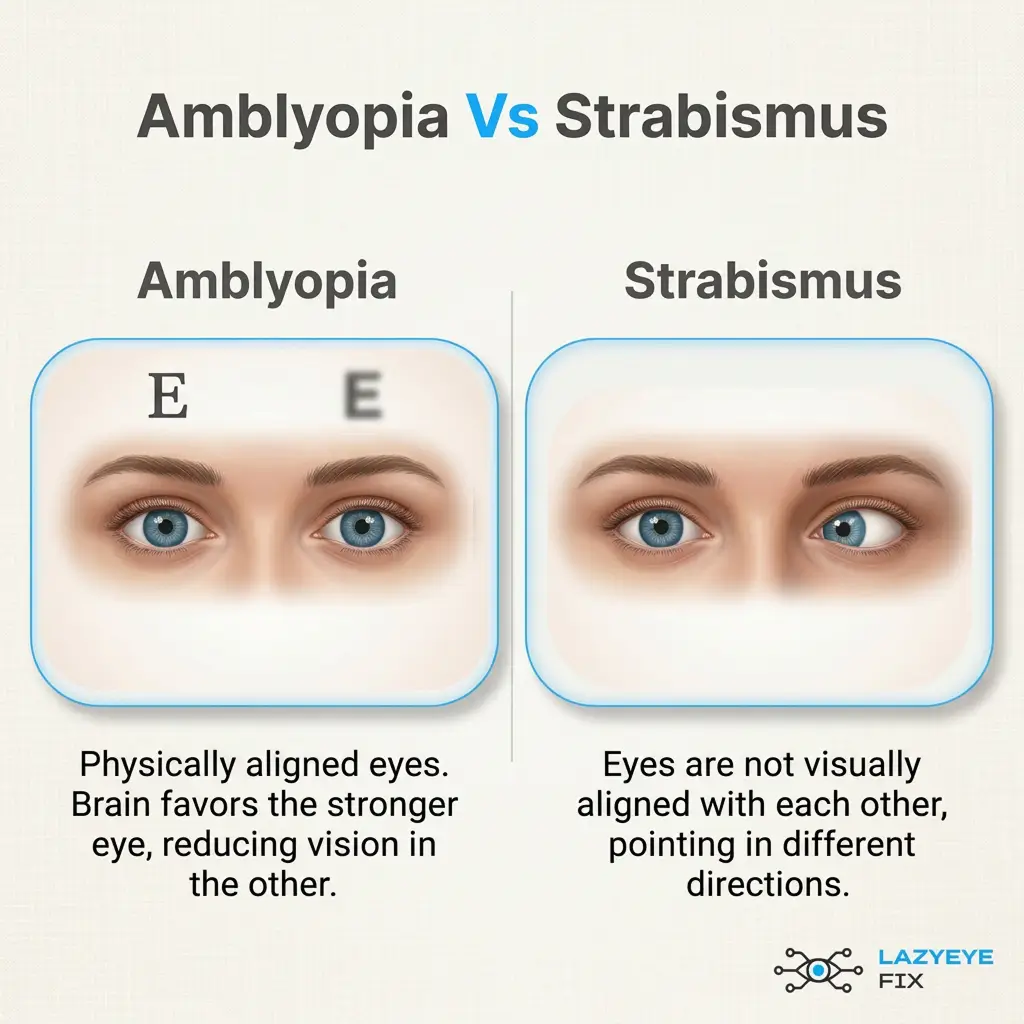
Amblyopia is a vision problem where one eye does not see as well.
Strabismus is an eye alignment problem where the eyes do not point the same way.
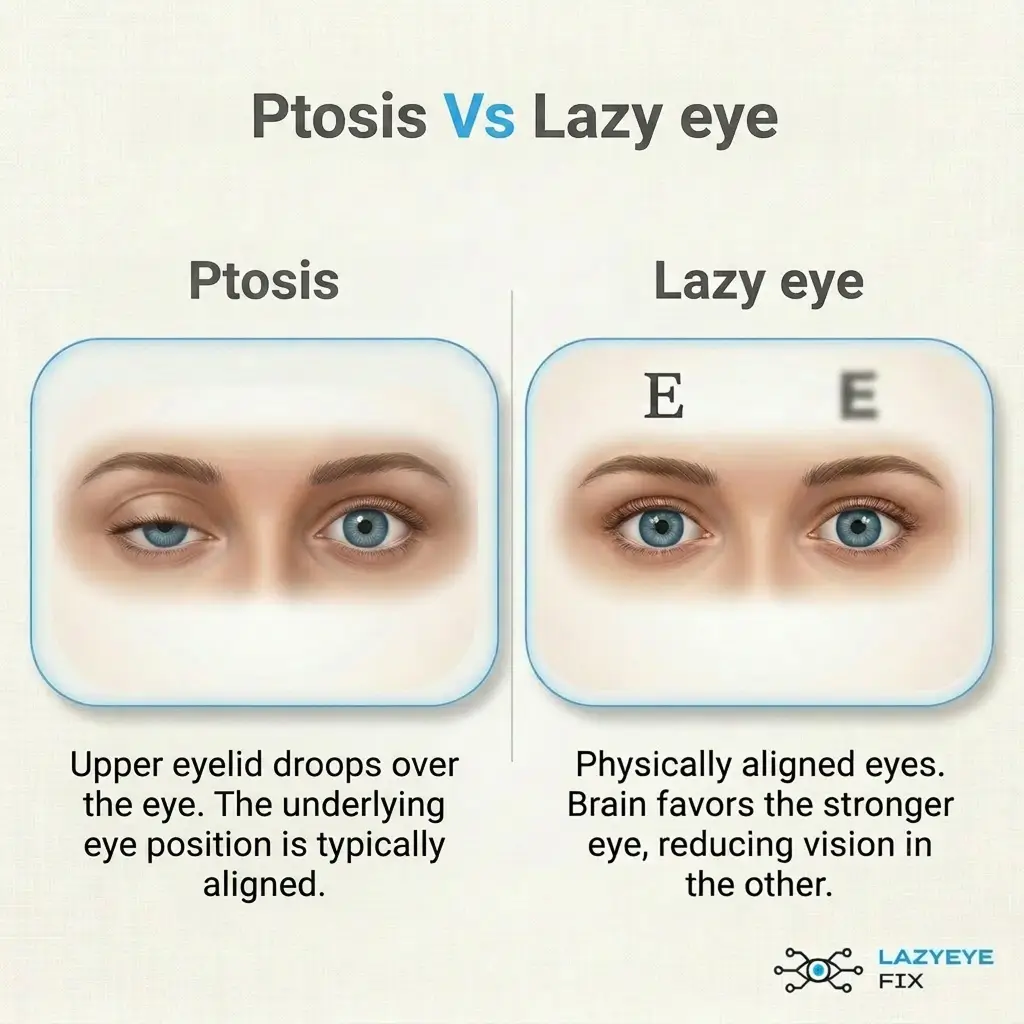
Ptosis is a droopy upper eyelid.
Lazy eye is a common everyday term. Doctors usually use it to mean a vision problem where one eye does not see as well.
FAQ
Frequently Asked Questions
It depends on age.
In young children, the brain quickly suppresses the signal from the wandering eye to avoid double vision, which can lead to a lazy eye (amblyopia).
If an older child or adult develops a wandering eye, their brain cannot suppress the image as easily, resulting in double vision.
Screen time itself doesn't cause amblyopia.
However, intense close-up focus can cause eye fatigue, which often makes an intermittent wandering eye (exotropia) drift more frequently. Tracking when the drift happens is a great first step for your eye doctor.
No, that is a classic sign of intermittent strabismus (often exotropia or phoria).
Fatigue or alcohol impairs the delicate muscle coordination required to keep eyes aligned, allowing the natural resting posture of the eye to show.
It is an alignment issue, not necessarily a visual acuity (lazy eye) issue.
- Does a wandering eye cause double vision, or does the brain just create a lazy eye?
- It depends on age. In young children, the brain quickly suppresses the signal from the wandering eye to avoid double vision, which can lead to a lazy eye (amblyopia). If an older child or adult develops a wandering eye, their brain cannot suppress the image as easily, resulting in double vision.
- Can staring at screens cause a wandering eye to turn into a permanent lazy eye?
- Screen time itself doesn't cause amblyopia. However, intense close-up focus can cause eye fatigue, which often makes an intermittent wandering eye (exotropia) drift more frequently. Tracking when the drift happens is a great first step for your eye doctor.
- If my eye only wanders when I am tired or drinking alcohol, is that a lazy eye?
- No, that is a classic sign of intermittent strabismus (often exotropia or phoria). Fatigue or alcohol impairs the delicate muscle coordination required to keep eyes aligned, allowing the natural resting posture of the eye to show. It is an alignment issue, not necessarily a visual acuity (lazy eye) issue.