Amblyopia vs Strabismus: Brain Vision vs Eye Alignment
Can you have straight eyes and still have a "lazy" eye? Discover the hidden neurological link between amblyopia vs strabismus that most people miss.
Quick answer
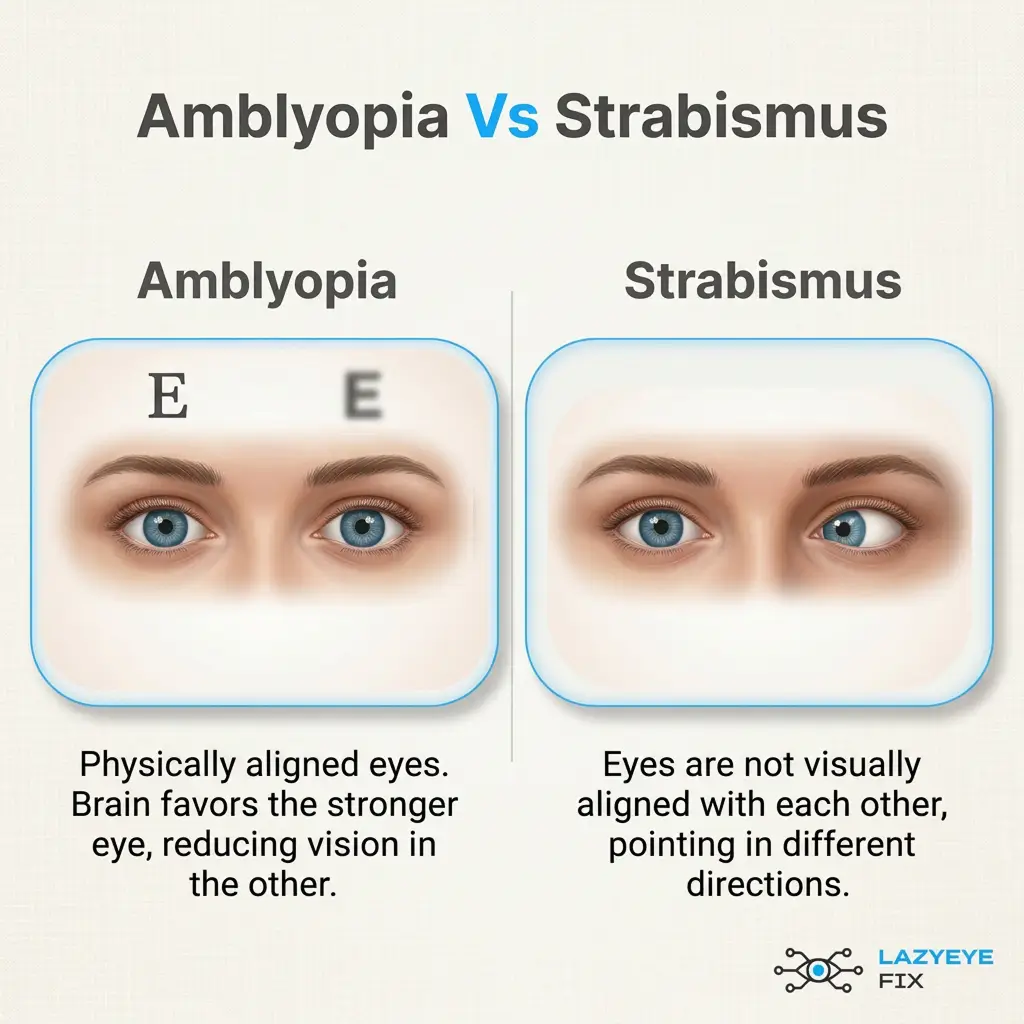
Amblyopia is a vision problem where one eye does not see as well.
Strabismus is an eye alignment problem where the eyes do not point the same way.
At a glance
A quick comparison table for the signs people usually notice first.
| Question | Amblyopia | Strabismus |
|---|---|---|
| Main issue | One eye does not see as well | Eyes do not point together |
| Underlying issue? | Brain visual processing | Eye muscle/alignment control |
| Visible in photos? | Usually no | Often yes |
| Can eyes look straight? | Yes | Sometimes |
| Best question to ask | Does each eye see clearly? | Do both eyes point together? |
How it works
Amblyopia
Amblyopia is the brain's ignore switch. The brain favors one eye and stops building strong detail from the other eye.
Brain
Brain
Strabismus
Strabismus is the eye's physical position. The eyes do not aim at the same target, even if each eye is structurally healthy.
Balanced eye muscles
Unbalanced eye muscles
See how eye alignment influences amblyopia
Move the slider to see how an eye drifting out of line can make the brain's signal harder to use.
Simplified visual model. It shows why the brain may rely less on one eye when the image is harder to combine or partly blocked.
Spot the difference
Choose the description that sounds closest to what you are noticing. This can help you use clearer words during an eye exam, but it is not a diagnosis.
Related lazy eye types
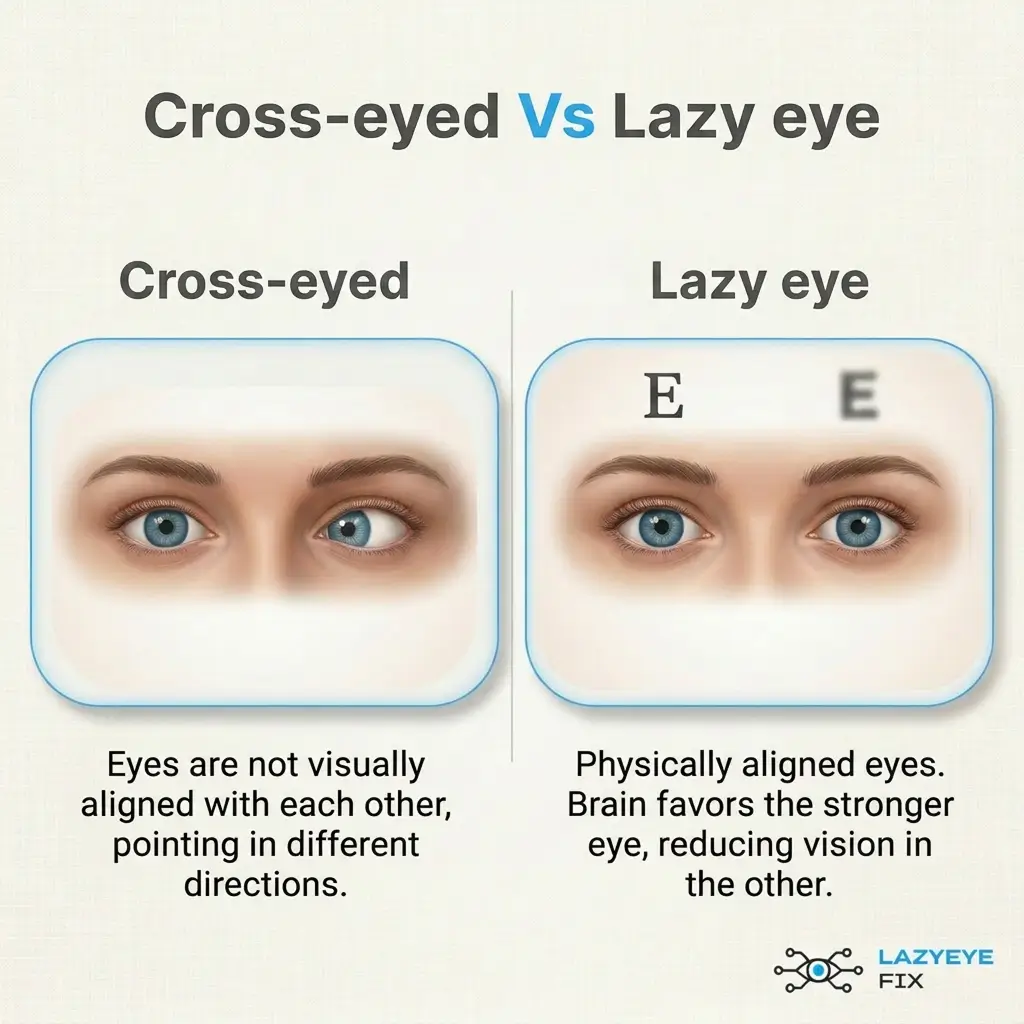
Cross eyed is when one eye turns inward.
Lazy eye is a common everyday term. Doctors usually use it to mean a vision problem where one eye does not see as well.
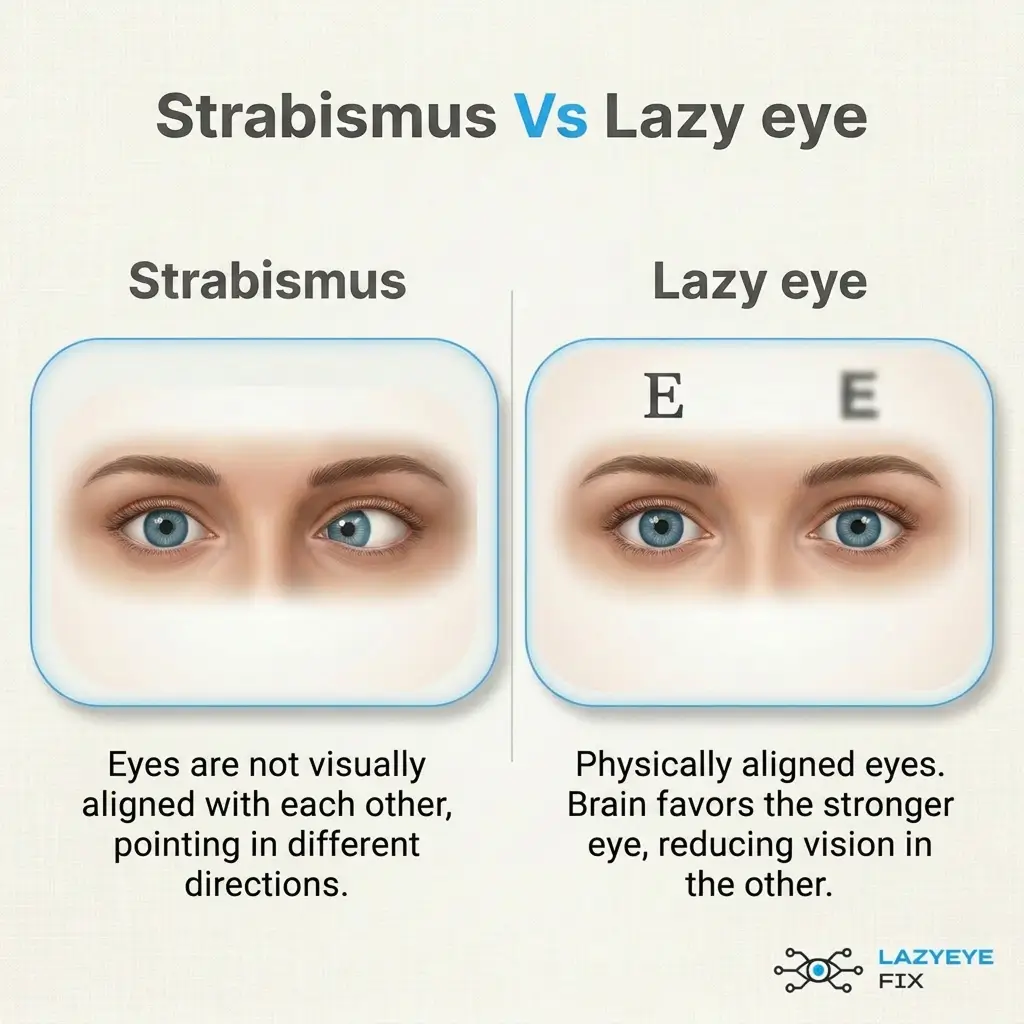
Strabismus is when the eyes are not aligned.
Lazy eye is a common everyday term. Doctors usually use it to mean a vision problem where one eye does not see as well.
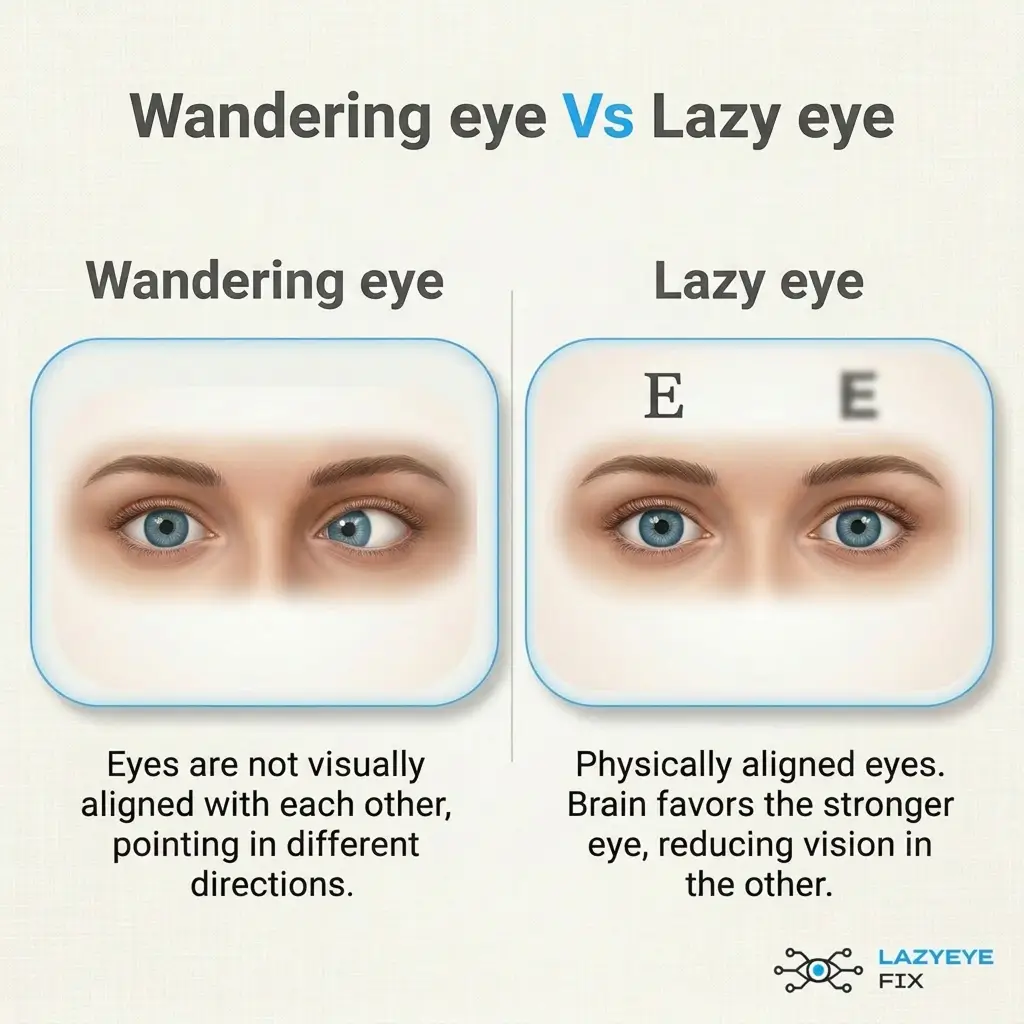
Wandering eye is when one eye drifts or moves out of line.
Lazy eye is a common everyday term. Doctors usually use it to mean a vision problem where one eye does not see as well.
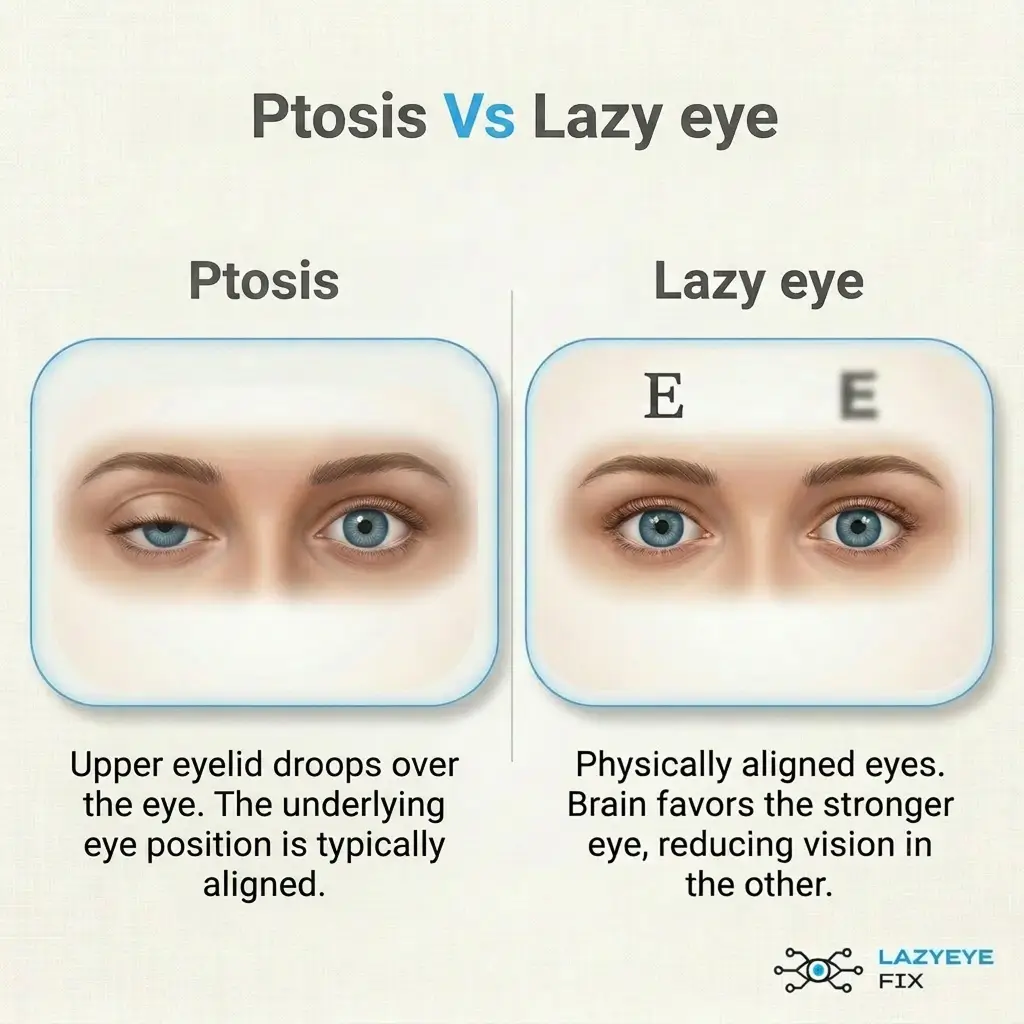
Ptosis is a droopy upper eyelid.
Lazy eye is a common everyday term. Doctors usually use it to mean a vision problem where one eye does not see as well.
FAQ
Frequently Asked Questions
An eye patch is almost exclusively used to treat amblyopia, which may help the alignment.
By covering the dominant eye, the brain is forced to rebuild neural pathways to the weaker eye.
It does not automatically fix the alignment, but often can help it.
Refractive amblyopia happens when there is a massive difference in glasses prescription between the two eyes (e.g., one eye is very farsighted).
The eyes stay perfectly aligned, unlike strabismus, but the brain still suppresses the blurry image, creating a hidden lazy eye.
Atropine drops are primarily an alternative to patching for amblyopia.
They temporarily blur the vision in the strong eye to force the brain to use the weaker eye.
They are not a standalone treatment for physical eye misalignment.
- Is an eye patch used to fix the alignment (strabismus) or the visual processing (amblyopia)?
- An eye patch is almost exclusively used to treat amblyopia, which may help the alignment. By covering the dominant eye, the brain is forced to rebuild neural pathways to the weaker eye. It does not automatically fix the alignment, but often can help it.
- What is 'refractive amblyopia' and how does it differ from strabismus?
- Refractive amblyopia happens when there is a massive difference in glasses prescription between the two eyes (e.g., one eye is very farsighted). The eyes stay perfectly aligned, unlike strabismus, but the brain still suppresses the blurry image, creating a hidden lazy eye.
- Do atropine eye drops work for strabismus, or are they only for amblyopia?
- Atropine drops are primarily an alternative to patching for amblyopia. They temporarily blur the vision in the strong eye to force the brain to use the weaker eye. They are not a standalone treatment for physical eye misalignment.