Cross-Eyed vs Lazy Eye: What Is the Difference?
Is it a muscle problem or a brain problem? Discover the curious difference between being cross-eyed vs lazy eye.
Quick answer
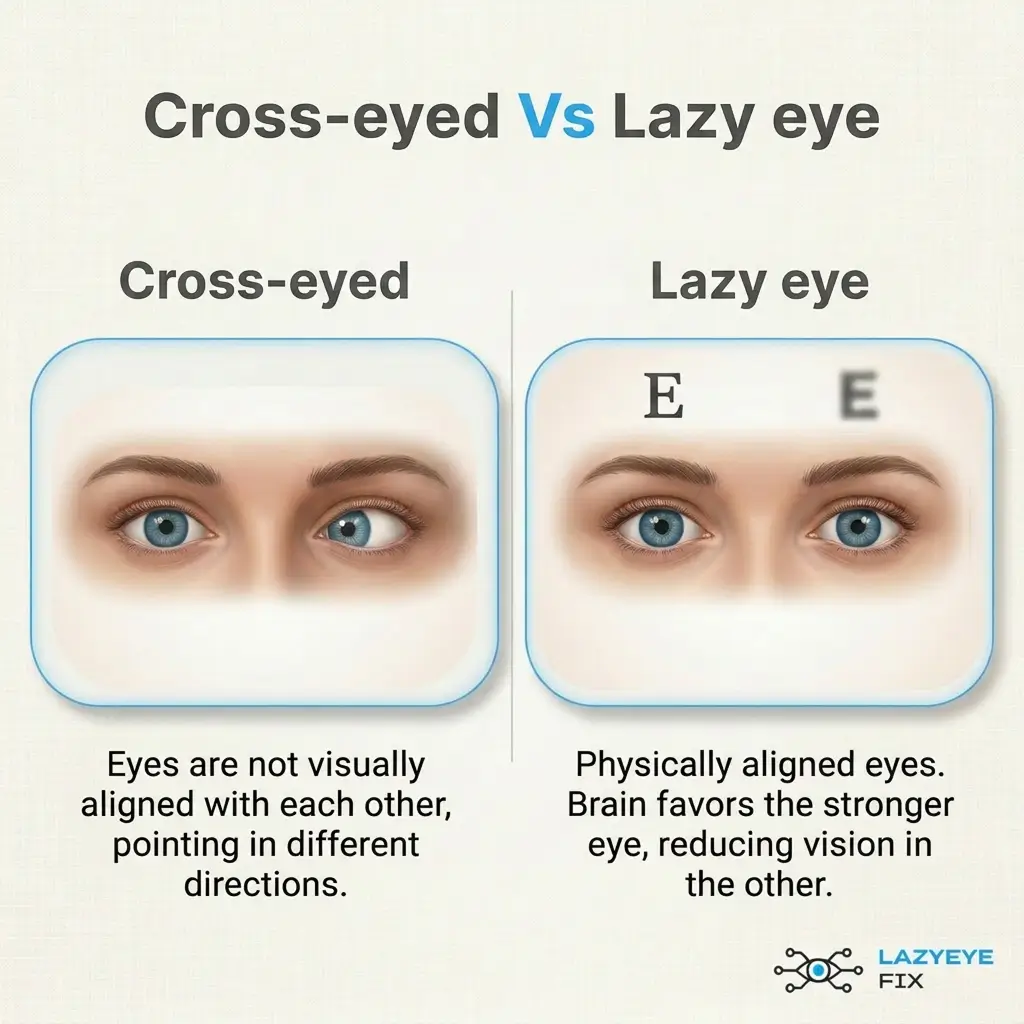
Cross eyed is when one eye turns inward.
Lazy eye is a common everyday term. Doctors usually use it to mean a vision problem where one eye does not see as well.
At a glance
A quick comparison table for the signs people usually notice first.
| Question | Cross-eyed | Lazy eye |
|---|---|---|
| Main issue | Eye turns inward | One eye does not see as well |
| Underlying issue? | Eye muscle/alignment control | Brain visual processing |
| Visible in photos? | Often yes | Usually no |
| Can eyes look straight? | Usually no | Yes |
| Best question to ask | Do both eyes point together? | Does each eye see clearly? |
How it works
Cross eyed
Cross eyed describes the eye's physical position. One eye turns inward instead of lining up with the other eye.
Balanced eye muscles
Unbalanced eye muscles
Lazy eye
Lazy eye usually describes the brain's reduced use of one eye's image. The eye may look straight, but the signal is not being fully used.
Brain
Brain
See how eye alignment influences amblyopia
Move the slider to see how an eye drifting out of line can make the brain's signal harder to use.
Simplified visual model. It shows why the brain may rely less on one eye when the image is harder to combine or partly blocked.
Spot the difference
Choose the description that sounds closest to what you are noticing. This can help you use clearer words during an eye exam, but it is not a diagnosis.
Related lazy eye types
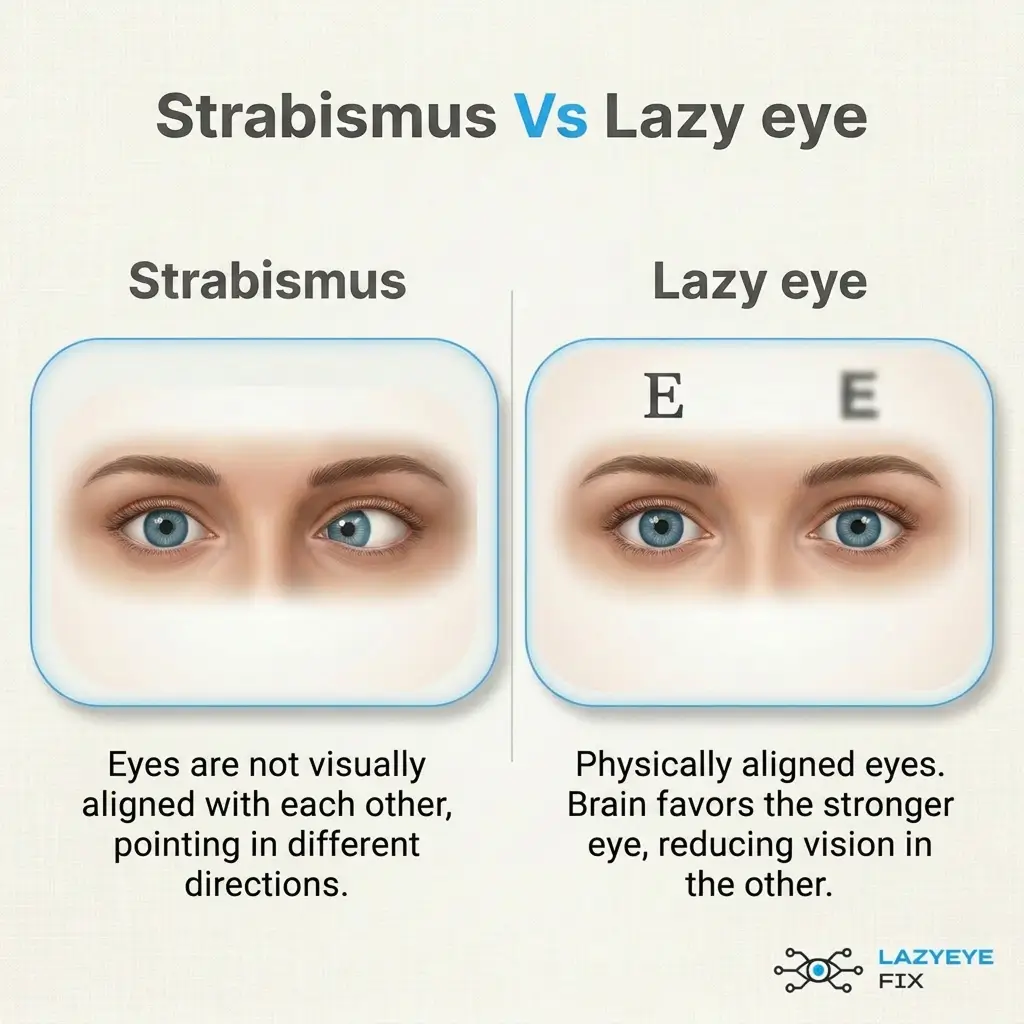
Strabismus is when the eyes are not aligned.
Lazy eye is a common everyday term. Doctors usually use it to mean a vision problem where one eye does not see as well.
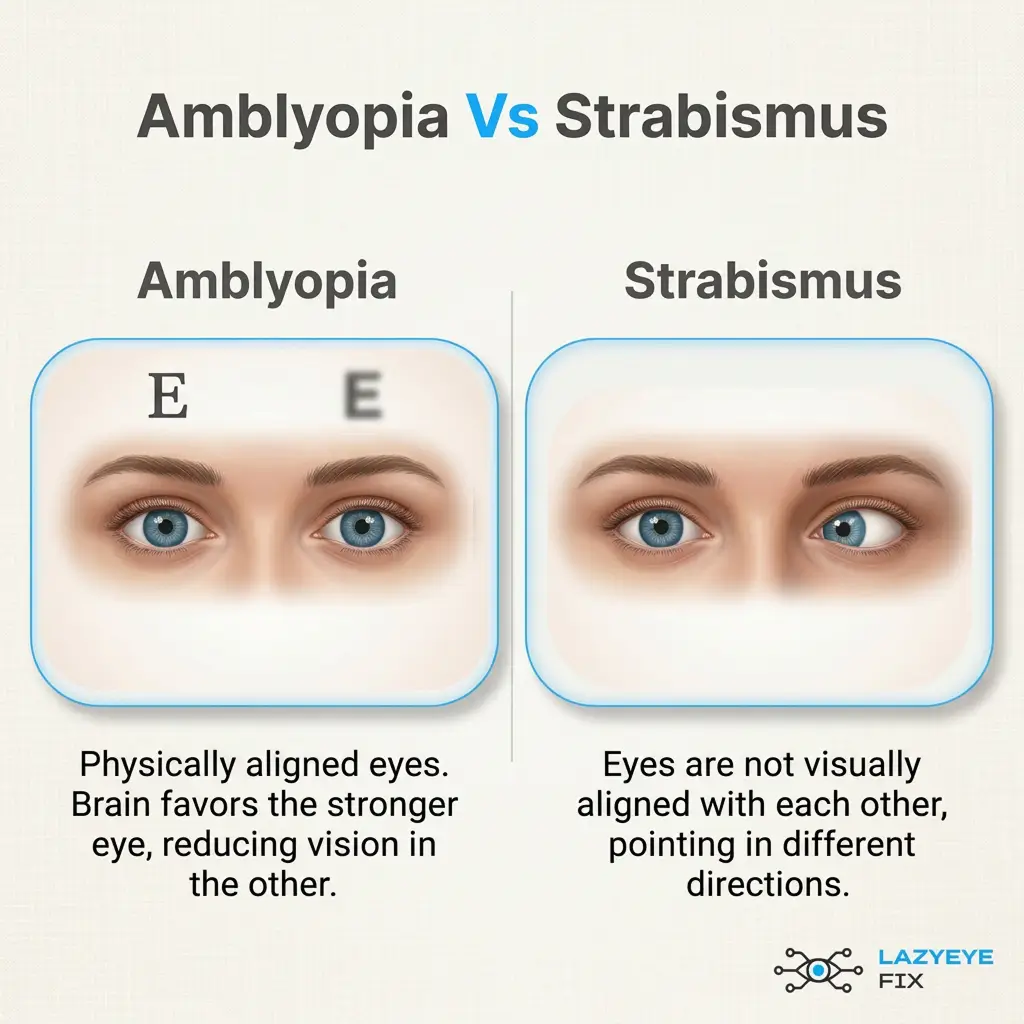
Amblyopia is a vision problem where one eye does not see as well.
Strabismus is an eye alignment problem where the eyes do not point the same way.
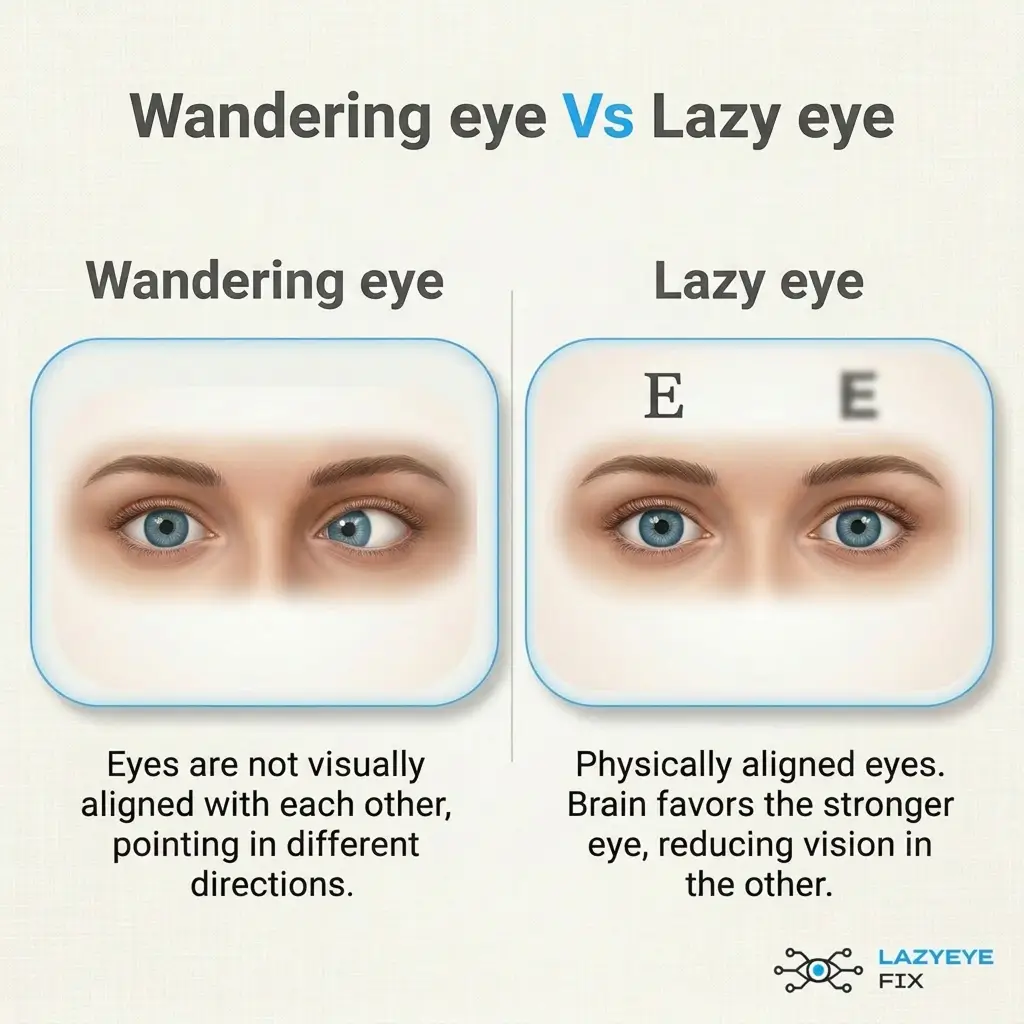
Wandering eye is when one eye drifts or moves out of line.
Lazy eye is a common everyday term. Doctors usually use it to mean a vision problem where one eye does not see as well.
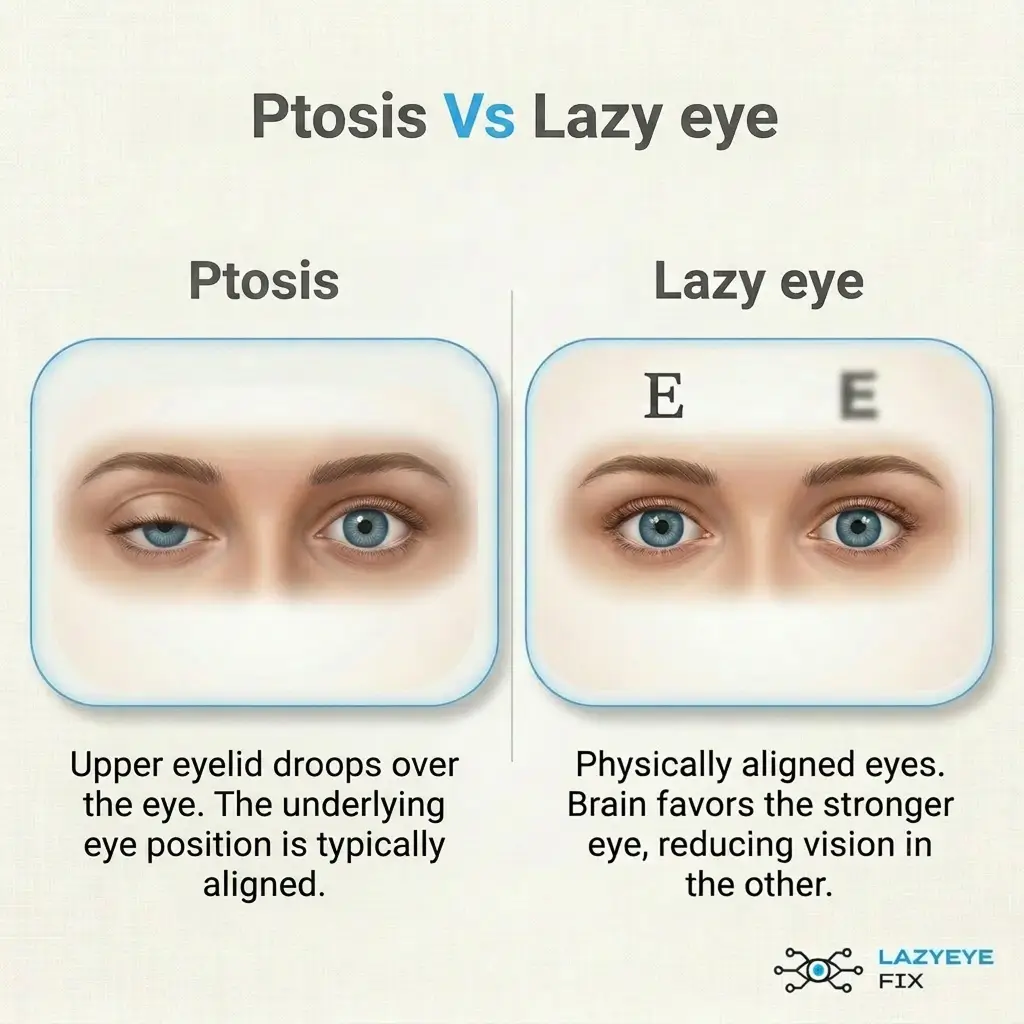
Ptosis is a droopy upper eyelid.
Lazy eye is a common everyday term. Doctors usually use it to mean a vision problem where one eye does not see as well.
FAQ
Frequently Asked Questions
Yes. A person can have perfectly clear eyesight in both eyes but still have an alignment issue (crossed eye).
However, if left untreated in early childhood, the crossed eye can gradually lose visual acuity and turn into a true lazy eye (amblyopia).
Sometimes. Strabismus surgery fixes the 'hardware' by physically realigning the eye muscles.
If the brain has already learned to ignore that eye (amblyopia), the 'software' still needs to be addressed through patching, drops, or visual training.
Many newborns have eyes that occasionally cross as they learn to coordinate their muscles, which usually resolves by 4 to 6 months.
If a constant inward turn persists after 6 months, it is true infantile esotropia, which carries a high risk of developing into amblyopia if not managed.
- Can an eye be crossed inward but still have 20/20 vision?
- Yes. A person can have perfectly clear eyesight in both eyes but still have an alignment issue (crossed eye). However, if left untreated in early childhood, the crossed eye can gradually lose visual acuity and turn into a true lazy eye (amblyopia).
- If surgery straightens crossed eyes, does it automatically cure the lazy eye?
- Sometimes. Strabismus surgery fixes the 'hardware' by physically realigning the eye muscles. If the brain has already learned to ignore that eye (amblyopia), the 'software' still needs to be addressed through patching, drops, or visual training.
- Are babies born cross-eyed, or does it develop into a lazy eye later?
- Many newborns have eyes that occasionally cross as they learn to coordinate their muscles, which usually resolves by 4 to 6 months. If a constant inward turn persists after 6 months, it is true infantile esotropia, which carries a high risk of developing into amblyopia if not managed.